
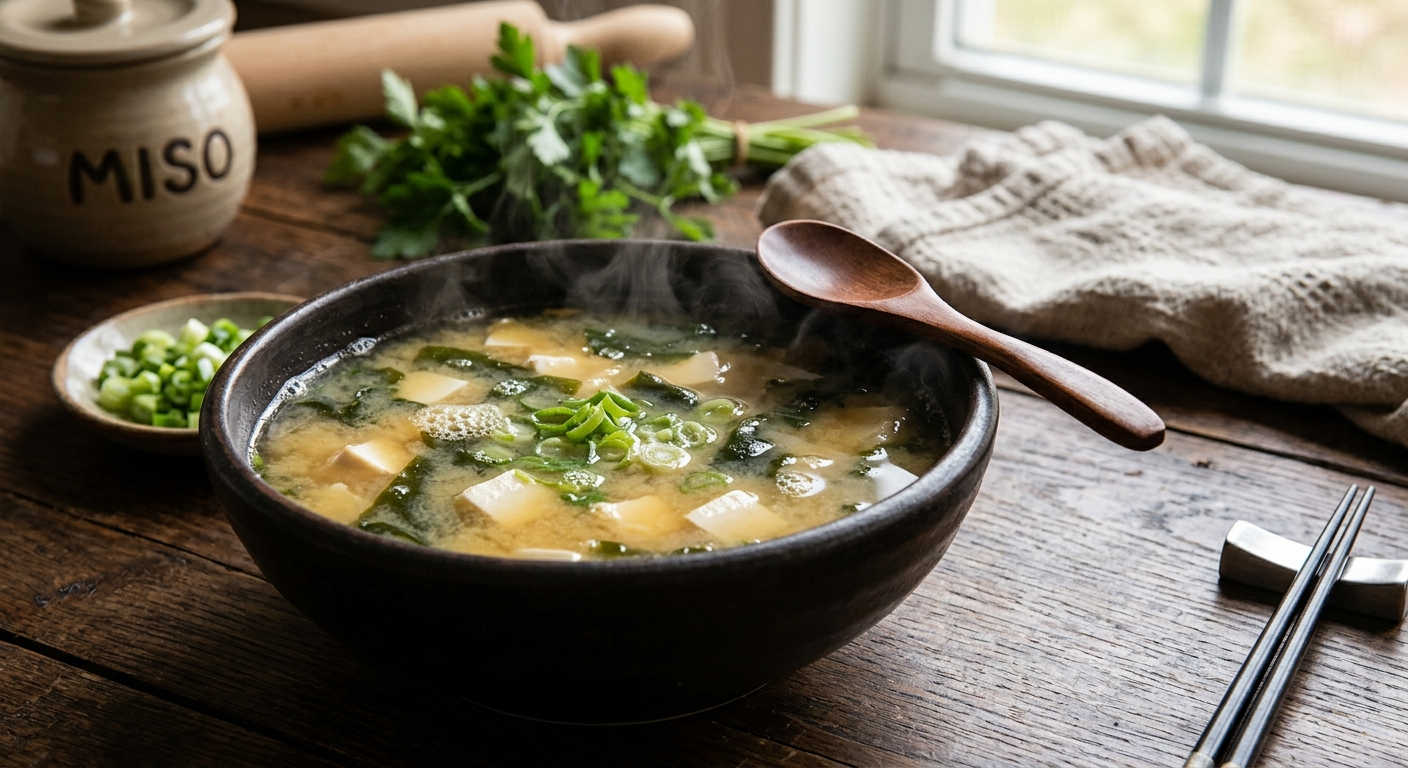
How to Make Miso Soup Authentic Recipe in 5 Easy Steps
Table of Contents
Quick Snapshot: How to Make Miso Soup Authentic Recipe
- Prep Time: 5 mins
- Cook Time: 10 mins
- Total Time: 15 mins
- Servings: 4 bowls
- Calories: ~70 kcal per serving
Why You Will Love Learning How to Make Miso Soup Authentic Recipe at Home
Understanding how to make miso soup authentic recipe standards at home brings incredible benefits to your daily meal prep routine:
- Incredible Umami Flavor: Real dashi combined with fermented miso paste creates a deep, complex flavor profile that instant powders cannot match.
- Nutrient-Dense & Probiotic: Miso paste contains beneficial probiotics that support digestive health, while seaweed offers essential minerals.
- Lightning Fast: Takes only 15 minutes from start to finish, making it the ideal starter or side dish for weeknight dinners.
- Naturally Health-Conscious: Low in calories yet deeply satisfying and warming.
Ingredients for How to Make Miso Soup Authentic Recipe
To follow this guide on how to make miso soup authentic recipe style, assemble these traditional pantry components:
Dashi Broth Ingredients
- 4 cups water
- 1 piece (about 4×4 inches) kombu (dried kelp)
- 1 cup (packed) katsuobushi (dried bonito flakes)
- Note: You can substitute 4 cups of water mixed with 1.5 teaspoons of dashi granules for a quick shortcut.
Soup Ingredients
- 3 to 4 tbsp yellow or red miso paste (adjust to taste preference)
- 8 oz (225g) silken or soft tofu, cut into 1/2-inch cubes
- 1 tbsp dried wakame seaweed
- 2 stalks scallions (green onions), finely sliced
Step-by-Step Instructions: How to Make Miso Soup Authentic Recipe
Follow these 5 sequential cooking steps to execute an authentic Japanese miso soup with perfect balance.
- Prepare the Dashi Stock: Gently wipe the kombu with a damp cloth (do not wash off the white powder). Place the water and kombu in a medium saucepan over medium heat. Right before the water comes to a rolling boil, remove and discard the kombu. Stir in the katsuobushi (bonito flakes), bring to a gentle boil, then turn off the heat and let steep for 5 minutes. Strain the broth through a fine-mesh sieve into a clean bowl; discard the solids.
- Rehydrate the Seaweed: While preparing the broth, soak dried wakame seaweed in a small bowl of cold water for 5 minutes until plump. Drain thoroughly and set aside.
- Simmer Tofu and Seaweed: Return the strained dashi broth to the saucepan over medium-low heat. Add the cubed tofu and rehydrated wakame seaweed. Simmer gently for 1 to 2 minutes until hot.
- Dissolve the Miso Paste: Turn off the heat completely or reduce it to the lowest setting. Place the miso paste into a fine-mesh strainer submerged partially in the warm soup. Use a spoon or whisk to dissolve the miso smoothly into the stock without lumps.
- Garnish and Serve: Ladle the soup into individual bowls, top with freshly sliced scallions, and serve warm immediately.
Pro Chef Tips for How to Make Miso Soup Authentic Recipe Perfection
Looking for complete meal pairings? Browse our selections in our dinner recipes hub, explore mid-day ideas in our lunch section, or check out our breakfast guides.
- Never Boil the Miso: Boiling miso destroys its delicate aromatic compounds and kills healthy probiotic enzymes. Always dissolve miso after turning off the heat.
- Choose the Right Miso: Yellow (Shinshu) or white (Shiro) miso offers a mild, slightly sweet taste perfect for everyday soups. Red (Aka) miso is stronger and bolder.
- Finish with Something Sweet: Pair this savory soup with a treat from our dessert recipes collection for a balanced dining experience.
Frequently Asked Questions About How to Make Miso Soup Authentic Recipe
Can I make miso soup vegan?
Yes! To make an authentic vegan version, substitute the bonito flakes with dried shiitake mushrooms when making the dashi stock, creating a 100% plant-based kombu-shiitake broth.
How long does homemade miso soup keep in the fridge?
Store leftovers in an airtight container in the refrigerator for up to 2 days. Reheat gently over low heat on the stove, making sure not to boil the soup. For special inquiries, feel free to contact us directly.
Can I freeze miso soup?
Freezing is not recommended because tofu changes texture significantly upon thawing and turning spongy, while the subtle aromas of dissolved miso degrade in the freezer.